

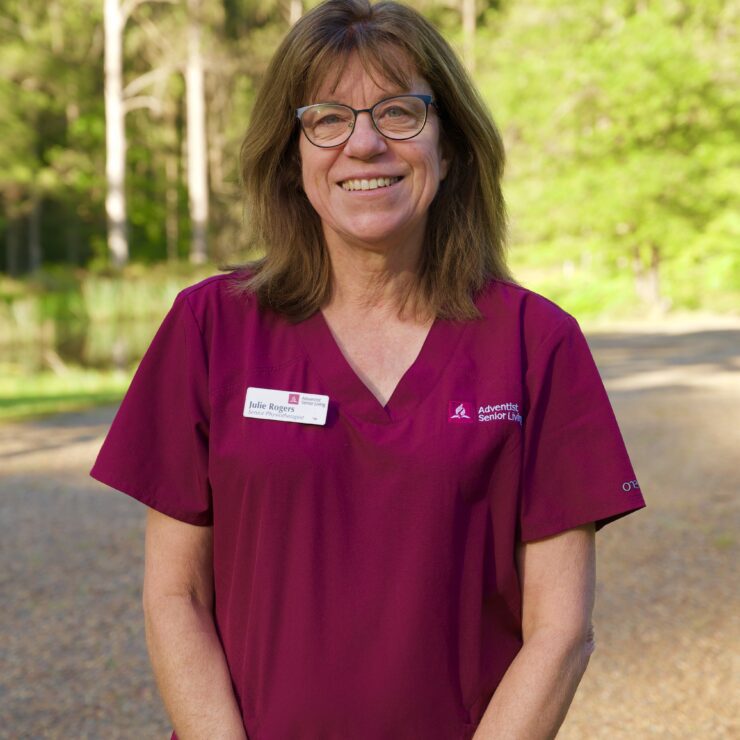
storiesA lifelong loyalty: Julie Rogers' unwavering commitment to providing exceptional service
Commitment to care
It was 1965 when a young Julie Rogers visited the Charles Harrison Memorial Home for the first time to see her grandfather. Over 20 years later, she walked the same halls with a baby in one arm and a toddler clinging to the other, this time to see her grandmother at the newly renamed Adventist Senior Living. She visited most weeks, and formed relationships with staff in the process.
“The Director of Nursing at the time called me and said, ‘I know you’ve got young kids, but we’d love to have a physio on the books. Could you come in and help us out for six hours a week?’ I never thought I’d work in aged care, but to my surprise, I really enjoyed it.”
Julie started a six-month trial as ASL’s sole physiotherapist, and over the years, her hours and responsibilities grew. Now, as Senior Physiotherapist, Julie leads a team of seven allied health professionals and coordinates 143 hours of shift work every week. Julie’s seen a lot of changes in her time, but still finds each day exciting.
“Working in aged care has been very dynamic – you wouldn’t believe the things I’ve seen. When I first started, I turned up at work with no job description – I was the first physiotherapist they’d ever employed! The standards back then were very different. My first patients had fought in World War 1; they weren’t used to luxuries in life. People expect a lot more from aged care now, and there’s far more complexity involved.”
Although ASL is vastly different than it was 27 years ago, one thing that hasn’t changed is the central focus of what we do: our residents. Julie agrees that as she overcomes the additional challenges of her role, she’s getting the best outcome for the residents and their families.
“What surprises me most about working in aged care was the amount of complex problem solving. When I was younger, I enjoyed the muscle and movement aspect of restorative physiotherapy, but here, we need to look at the whole person. Someone’s social situation, family background or psychological makeup can all have an impact on their physical mobility. We work integrally within all areas of a resident’s life to give them the best possible care.”
A tight-knit team
Contrary to what many would believe, Julie’s found working in aged care to be an exciting career path, and she receives immense satisfaction from using her professional skills to make a difference in someone else’s life. She has learned that one of the hallmarks of aged care is to never expect the same two days in a row.
When she first arrives at work, Julie checks in with the Registered Nurse on duty, and receives a handover of any issues related to a resident’s physio services. From here, she briefs her team on which residents’ conditions have changed, any modifications to their pain management or exercise therapy, and anyone they should avoid seeing due to COVID-19 or other infections.
As the day progresses, her tasks may change, but Julie is nothing if not adaptable. With the support of her team, she skillfully solves any problems that arise, whether it’s a resident who has had a fall or someone needing a mobility reassessment.
“I personally knew the three other physios I work with before they started here. One of them was even my boss when I first left uni! In many ways, it feels like a family, which is nice. Everyone’s willing to learn and embrace the challenges of our constantly changing environment. We’re not satisfied just to tick a box and go home. We’re a team that strives for excellence in all we do, particularly in our service to the residents.”
Julie sees this commitment to service and deep sense of care reflected across all levels of ASL’s multidisciplinary team, and credits this as one of the many reasons why she’s still here after so long.
“I feel I’m an integral part of the team. I treat others with respect and receive respect in return. I also served on the executive committee for three years, which gave me great insight into the strategic views of the organisation and how they’re always doing their best to make this a great place to work. The intention and commitment to culture has made a good thing great, and that’s filtered from the top down.”
Relationships that matter
Julie has a lot to be proud of over the course of her career. When she looks back, the highlight is undoubtedly the relationships formed through the ASL community.
“We actually won a Better Practice award for a collaboration we did with the local high school, which ran for several years. We facilitated connections between the Year 8 students and our residents, and watched them form really special relationships over a six-month period. The young people coming in really helped the residents, particularly those with cognitive disabilities and memory challenges, and it showed what a difference it makes to include the community in resident care. It was a really big team achievement to come together and be a part of something bigger.”
One of the reasons why Julie has stayed with ASL as long as she has is the high value placed on fostering a positive staff culture.
“Over the years, I’ve built great working relationships I may not find anywhere else. Why leave something that’s great when you’re not sure what it’ll be like elsewhere? I feel like my personal values align strongly with the organisation’s, and I just really believe in this place.”
storiesThere are a number of roles and programs available, so what are you waiting for?
Hear their stories

“I want to say how thankful I am that I live here. All the carers, volunteers, dining and kitchen staff are all so willing, lovely and helpful”
Evelyn
Lavender Terrace residential care

The smiling faces, caring hearts, gentle hands and encouraging words from all the staff have made my mother’s life here on Bellbird Cottage very comfortable, peaceful and happy. Such a great team.
Anna
Daughter of resident at Bellbird Cottage

I want to express my appreciation for the wonderful and compassionate care that my wife is receiving at your home. Thank you for taking the time to get to know my wife over the past few months and for making her feel comfortable and safe there. This gives us peace of mind.
Maurice
Husband of resident at Avondale House

Peter and I moved into Jewells Lifestyle village just over 7 years ago. We have never had a reason to regret our decision. We have made many friends here who we socialise with and we enjoy a wonderful lifestyle with the security of knowing that all our wants are catered to.
Peter and Marilyn Hair
Residents at Jewells Lifestyle Community